



Quick answer
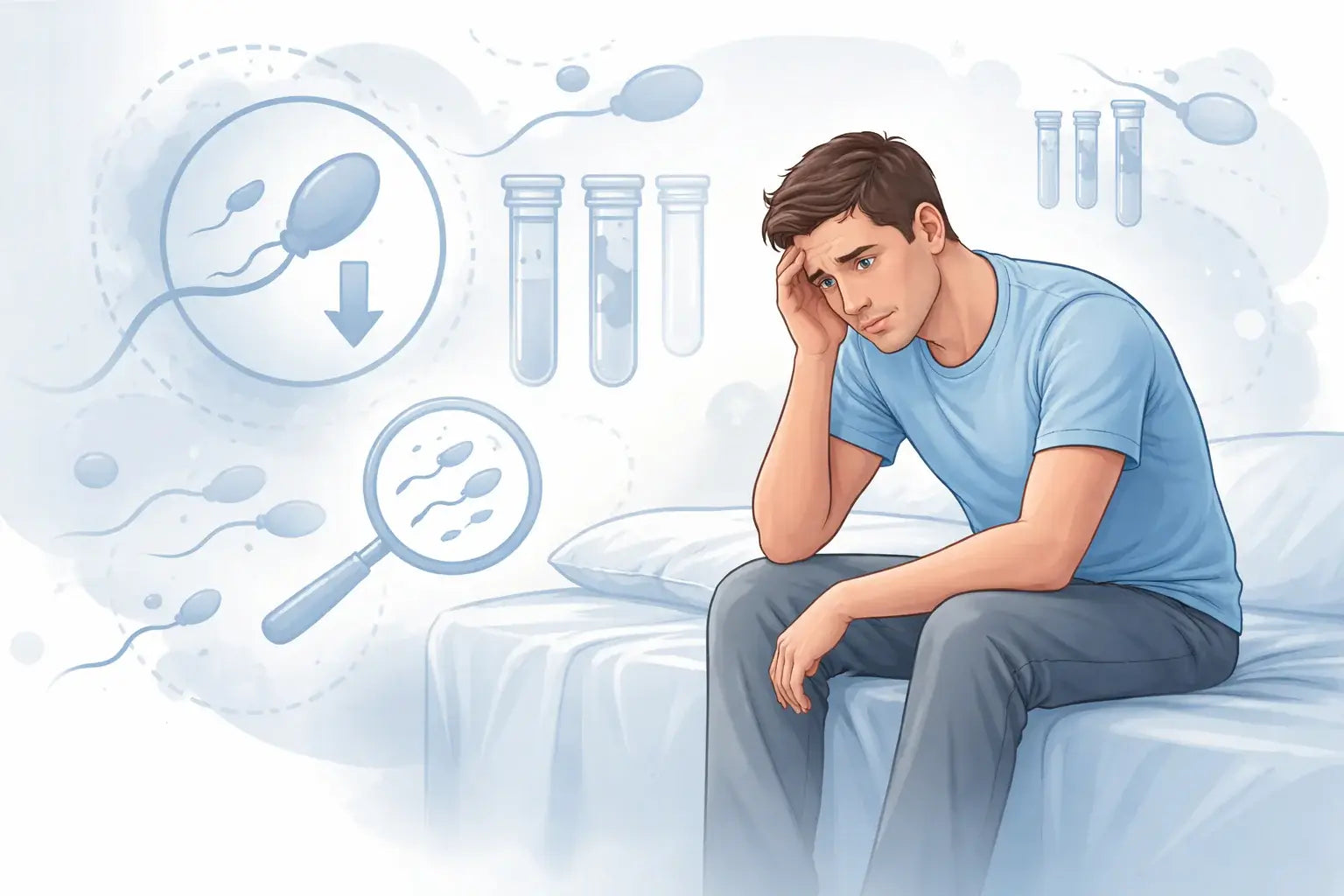
Male infertility means a man has difficulty contributing to a pregnancy because of problems with sperm production, function or delivery, and it accounts for a large share of infertility cases. Usually there are no obvious symptoms beyond being unable to conceive after a year of trying. Causes vary widely, so treatment follows the underlying cause.
Introduction
Male infertility is a common yet overlooked medical condition that affects a man’s ability to contribute to pregnancy. 40 - 50% of infertility cases are due to male factors worldwide. Many men experience no obvious symptoms, making early diagnosis essential. Understanding male infertility causes, symptoms, and treatment options is critical for improving conception outcomes.
What Is Male Infertility?
Male infertility is a medical condition in which a man has difficulty contributing to pregnancy due to problems with sperm production, function, or delivery. It is diagnosed through semen analysis, when a couple is unable to conceive after 12 months of regular, unprotected sexual intercourse.
From Dame Health: Men's Fertility Boost — zinc, L-methylfolate, lycopene and tribulus for men's preconception nutrition.
What Are The Male Infertility Symptoms?
In most of the cases, male infertility occurs without obvious symptoms. The inability to achieve pregnancy is the only noticeable sign. Certain symptoms suggest underlying reproductive disorders. The most common male infertility symptoms are:
- Reduced sexual desire or erectile dysfunction
- Ejaculatory disorders
- Pain, swelling, or lumps in the testicles
- Decreased facial or body hair indicating hormonal imbalance
- Enlargement of breast tissue due to estrogen excess
These male infertility symptoms can lead to psychological distress, including anxiety, depression, and reduced self-esteem.

What Are The Male Infertility Causes?
Male infertility can result from a wide range of factors. The reasons for male infertility can be hormonal, genetic, anatomical, lifestyle-related, or linked to underlying medical conditions.
Sperm Production and Function Disorders
Sperm abnormalities are the most common male infertility causes. These abnormalities reduce the ability of sperm to reach and fertilize the egg.
- Oligospermia: Low sperm count
- Azoospermia: Complete absence of sperm
- Asthenozoospermia: Reduced sperm motility
- Teratozoospermia: Abnormal sperm morphology
Hormonal Imbalance
Hormonal imbalance is a key cause of male infertility and can often be corrected with treatment. It can result from:
- Low testosterone levels (hypogonadism)
- Elevated prolactin levels (hyperprolactinemia)
- Abnormal follicle-stimulating hormone (FSH) or luteinizing hormone (LH) levels
- Underactive (hypothyroidism) or overactive (hyperthyroidism) thyroid gland
- High levels of cortisol
Varicocele
Varicocele is the abnormal enlargement of the veins present in the scrotum. This can increase the temperature in the testicles and affect sperm production and quality.
Genetic and Congenital Causes
Some men are born with genetic conditions that can affect their ability to have children. These include:
- Klinefelter syndrome, where a man is born with an extra X chromosome
- Missing or damaged genes on the Y chromosome can affect sperm production (Azoospermia factor (AZF) microdeletions)
- Being born without the tubes that carry sperm is linked to inherited genetic changes (CFTR mutations)
Infections and Inflammation
Bacterial infections and inflammation can affect the sperm quality, production and viability. This is due to:
- Sexually transmitted infections can damage the organs involved in sperm production.
- Epididymitis causes swelling in the tube that carries sperm.
- Prostatitis causes swelling of the prostate gland which lowers the semen quality.
- Orchitis causes swelling of the testicles.
Lifestyle and Environmental Factors
Lifestyle and environmental factors are a crucial and silent reason for male infertility. The following habits can impact the sperm quality:
- Smoking and alcohol consumption
- Recreational drug use (e.g., anabolic steroids)
- Obesity and poor nutrition
- Exposure to heat, radiation, pesticides, and heavy metals
- Old age, chronic stress and sleep deprivation
Medications and Medical Treatments
Certain medications and medical treatments can impact sperm production, including:
- Chemotherapy and radiotherapy
- Long-term opioid use
- Some antidepressants and antihypertensives
What Are The Male Infertility Treatment Options?
Male infertility treatment is tailored to the underlying cause. It involves a combination of lifestyle modifications, supportive fertility supplements, medical and surgical measures, and assisted reproductive strategies.
Lifestyle Interventions
Lifestyle modifications can improve the sperm parameters to an extent. The first-line treatment for male infertility includes:
- Smoking and alcohol cessation
- Weight reduction and regular exercise
- Stress management and sleep regulation
- Avoidance of heat exposure and toxins
Supplements for Male Infertility
Fertility supplements are used along with medical treatments to enhance the treatment outcomes. They are supportive rather than curative. The common supplements for male infertility include:
- Zinc and Selenium: Supports sperm function
- Coenzyme Q10: Enhances sperm motility and energy production
- Folic acid: Supports sperm DNA health
- L-carnitine: Improves sperm motility and count
- Vitamins C and E: Protect sperm from oxidative damage
- Vitamin D: Maintains healthy testosterone levels
- Ashwagandha and Melatonin: Reduces stress and improves sleep
At Dame Health, fertility supplements are available that can support reproductive health along with medical treatments.
Men's Fertility Boost Supplements
At Dame Health, we have a male fertility supplement that supports sperm count, movement and shape with zinc, antioxidants, ashwagandha, and fertility-supportive vitamins.

Men’s Fertility Boost Ingredients
Our supplements to increase sperm count are formulated with key nutrients such as zinc, active folate, selenium, antioxidants like lycopene and NAC, and ashwagandha that support sperm count, movement and shape.

Medical and Hormonal Treatment
Hormonal Treatment for male infertility requires careful monitoring by specialists to avoid adverse effects. It is effective in men with hormonal abnormalities:
- Hormone injections can help the body improve sperm production
- Medicines that support hormone levels can increase sperm count
- Drugs that lower excess estrogen help restore hormone balance
- Medications that reduce high prolactin levels help normalize reproductive hormones
Surgical Treatment
Surgical options address anatomical causes:
- Surgery to treat varicocele can help improve sperm quality
- Vasectomy reversal reconnects the tubes to achieve sperm transport
- Sperm retrieval procedures involve collecting sperm directly from the testes when it is not present in semen
Assisted Reproductive Technologies
When conventional treatment fails, Assisted Reproductive Technologies offers effective solutions:
- Intrauterine insemination (IUI): Sperm is placed directly into the uterus to achieve pregnancy
- In vitro fertilization (IVF): Eggs and sperm are combined in a lab, and the resulting embryo is placed into the uterus.
- Intracytoplasmic sperm injection (ICSI): A single sperm is injected directly into an egg to help fertilization
- Assisted Reproductive Technologies depend on the female factors and overall health of the couple.
Conclusion
Male infertility is a complex but treatable condition. A clear understanding of male infertility causes, early recognition of male infertility symptoms, and personalized male infertility treatment can improve conception outcomes. Some individuals consider health supplements as supportive measures with medical treatments to improve sperm count. Early diagnosis and evidence-based care remain the cornerstone of successful fertility management.
Shop related from Dame Health
Frequently Asked Questions
Can male infertility be reversed?
Yes, most cases of male infertility are treatable. Lifestyle changes, medical therapy, surgical correction, and assisted reproductive technologies can improve fertility outcomes.
What is the overall prognosis for men diagnosed with infertility?
The prognosis is favourable when infertility is identified early. Many men achieve natural conception or successful pregnancy through treatments.
How long does male infertility treatment take to show results?
Results are seen after three to six months of treatment. Sperm production cycles last approximately 74 days.
Do male infertility supplements improve sperm quality?
Male infertility supplements help improve sperm count, motility, and DNA integrity by reducing oxidative stress. They are most effective when used with medical treatments and healthy lifestyle practices.
Is male infertility preventable in all cases?
Cases caused by genetic or congenital factors are not preventable. Lifestyle-related and environmental causes can be reduced through preventive measures.
Keep reading
References
- https://pmc.ncbi.nlm.nih.gov/articles/PMC4691969/
- https://doi.org/10.3390/jcm14113930
- https://pmc.ncbi.nlm.nih.gov/articles/PMC4708300/pdf/tau-03-01-009.pdf
- https://my.clevelandclinic.org/health/diseases/17201-male-infertility#management-and-treatment


