



Quick answer
Men have no clear reproductive cut-off, and sperm production continues through life, but quality does change with age. Sperm count, motility, testosterone levels and DNA integrity all shift gradually, and the effect of paternal age becomes more noticeable from the mid-thirties onwards. In couples struggling to conceive, male age matters more than people usually assume.
Key Takeaways
- Male fertility declines gradually with age, especially after 35.
- Sperm quality, motility, and testosterone levels reduce over time.
- Peak fertility is usually in the 20s and early 30s.
- A healthy lifestyle and fertility supplements for men can help support sperm health.
Introduction
Whenever fertility and age come up, the conversation is almost always directed towards women. Men also experience an age-related decline in male reproductive health, though more gradually. A man may continue producing sperm throughout life, but sperm quality can change significantly with age. Sperm count, motility, testosterone levels, and DNA integrity all begin to shift over time. In many couples who struggle with conception, male age and fertility can play a much bigger role than people realize.
We are going to explore the male fertility age chart, talk about how sperm production age changes over time, and when male fertility starts declining.
What is Male Fertility?
Male fertility refers to a man's ability to successfully contribute to conception. It depends on the production of healthy sperm in adequate numbers. For pregnancy to happen naturally, sperm must:
- Be produced in sufficient quantity
- Demonstrate strong motility
- Have a healthy structure and shape
- Carry intact genetic material
From Dame Health: Men's Fertility Boost — zinc, active folate (Quatrefolic), lycopene and tribulus for men's preconception nutrition.
Hormones, reproductive health, nutrition, stress levels, sleep quality, and lifestyle all influence male fertility. Unlike women, men do not have a strict reproductive cutoff. However, it does not mean that sperm quality remains unchanged. The impact of paternal age on conception and pregnancy success becomes evident after the mid-30s.
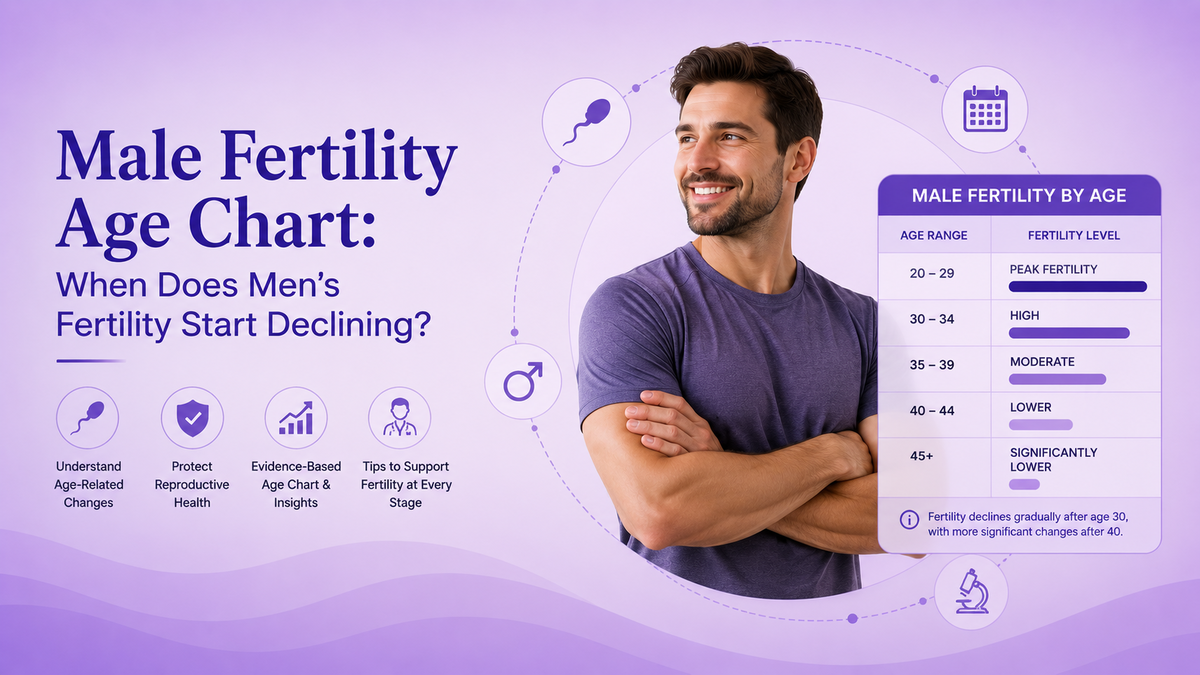
Male Fertility Age Chart
Here is a male fertility age chart that shows how fertility changes over time.
|
Age Group |
Fertility Status |
|---|---|
|
20-29 |
Peak fertility with the best sperm quality and quantity |
|
30-34 |
Fertility remains strong with a mild decline beginning |
|
35-39 |
Noticeable reduction in sperm motility and testosterone |
|
40-49 |
Decline in sperm quality with higher DNA fragmentation |
|
50+ |
Reduced fertility and lower chances of natural conception |

When Does Male Fertility Start Declining?
One of the most searched questions online is “when does your body stop producing sperm?”. The answer is more complex than you think. Men continue producing sperm throughout their lifetime, but sperm production and quality age over time. Research has shown that peak male fertility begins declining around age 35. After 40, fertility changes become more noticeable because:
- Sperm count tends to decrease
- Sperm motility slows down
- Testosterone levels reduce
- DNA fragmentation risk increases
- Conception may take longer
Biologically speaking, sperm production rarely stops completely; however, healthy sperm production and fertility lifespan are reduced with age, especially after 50.
Risk Factors and Warning Signs Linked With Men's Fertility Age Decline
Age is not the only factor that affects men's fertility. Several medical and lifestyle factors can also accelerate fertility decline.
Smoking and Alcohol
Smoking damages sperm DNA and reduces sperm quality over time. Excessive alcohol consumption can also lower testosterone levels.
Obesity
Excess body fat disrupts hormone balance and negatively impacts sperm production.
Stress
Chronic stress increases cortisol levels, which can interfere with testosterone and reproductive hormones.
Poor Diet
Nutrient deficiencies can reduce sperm count and motility. In particular, antioxidants play a major role in protecting sperm health.
Medical Conditions
Conditions such as diabetes, varicocele, hormonal imbalance, infections, and thyroid disorders may affect fertility with age.
Lifestyle Habits That Affect Fertility in Men and Reproductive Health
Modern lifestyles place significant pressure on male reproductive health. Late-night work schedules, poor sleep, processed foods, alcohol intake, smoking, environmental toxins, and stress all lead to low sperm count associated with increasing male age.
Even excessive heat exposure, like regular sauna use, laptops placed directly on the lap, and tight clothing, can also affect sperm production. Studies have shown that a sedentary lifestyle can reduce sperm quality, while regular exercise can improve hormonal balance and reproductive health.
Tips to Improve Male Fertility and Sperm Health Naturally
Many fertility factors are modifiable. There are small lifestyle changes that can help you support natural ways to improve sperm fertility and testosterone health.
- Eat a fertility-friendly diet
- Exercise regularly
- Maintain healthy weight
- Avoid smoking and limit alcohol
- Prioritise sleep
- Manage stress
Nutritional support can help improve sperm quality and reproductive health. To that end, you can check out supplements for men from Dame Health that are designed to support sperm health and promote male reproductive wellness.
When To Seek Medical Help for Male Fertility Problems
Many couples wait too long before seeking fertility support. You should consider seeing a fertility specialist if:
- Pregnancy has not occurred after 12 months of trying
- Your partner is over 35
- There is a history of low testosterone or reproductive issues
- Erectile dysfunction or ejaculation problems are present
- There are concerns about sperm quality with age
Shop related from Dame Health
Frequently Asked Questions
What is considered the best age for male fertility and healthy sperm production?
The best age for male fertility is usually between 20 and 30 years. During this period, sperm count, motility, testosterone levels, and overall sperm quality are generally at their peak.
Why does sperm motility decrease as men get older?
As men age, hormonal changes, oxidative stress, and DNA damage affect sperm cells. This can reduce sperm motility and make it harder for sperm to reach and fertilise the egg.
How does paternal age affect pregnancy and baby health outcomes?
Advanced paternal age can increase the risk of miscarriage, genetic mutations, autism, and certain developmental conditions in children that are a result of higher DNA fragmentation in sperm.
What are the common symptoms of declining male fertility with age?
Some common symptoms include low sex drive, erectile dysfunction, low semen volume, fatigue, and difficulty conceiving naturally.
Which daily habits help maintain healthy male fertility over time?
Regular exercise, balanced nutrition, quality sleep, stress management, avoiding smoking, limiting alcohol, and maintaining a healthy weight can all help support male fertility and sperm health naturally.
Keep reading
Popular Searches
Health Supplements | Bone Health Supplements |Best Fertility Supplements Online | Preconception multivitamin for women | Pregnancy Support Plus | Coenzyme Q10 supplement
Disclaimer: This article is for general information and is not a substitute for medical advice. Please consult your doctor or gynaecologist before starting any supplement, so they can recommend the right dose for you.


